From L to R: Mohammad Jaljouli (Dubai), Sanjaya Bhatia (UNDRR), Mohammed Aseeri (Medina), Hajar Seed (Ajman), Patricia McCarney (WCCD), Shumous Bin Faris Al Sebaia (Dubai), Akram Khasrit (Amman), James Patava (WCCD)
Following the successful launch of the Dubai-WCCD Local Data Hub in November 2019, a group of data-driven cities from across the Middle East – including Dubai (UAE), Medina (Saudia Arabia), Amman (Jordan), and Ajman (UAE) - alongside long-standing WCCD Partner, UNDRR came together for a side event at the UN World Urban Forum. With a decided focus on the importance of city data in creating smarter, more resilient, sustainable and inclusive cities, the group spoke at length on how WCCD’s ISO 37120 Series of Standards is helping to transform how they look at their cities both internally, and compared to the 100 WCCD member cities, across 39 countries. Click here for more photos of the event on the WCCD's Facebook page.
Click below for a short video highlighting the event!
From L to R: WCCD VP James Patava, Guelph CAO Scott Stewart, WCCD CEO Patricia McCarney, City of Guelph Staff Tanya Baker, Jennifer Smith, Guelph Mayor Cam Guthrie, City of Guelph Staff Jodi Sales & Stewart McDonough
FOR IMMEDIATE RELEASE
Friday, March 2nd, 2010
City of Guelph, Ontario, Canada
Today, the World Council on City Data (WCCD) Senior Leadership was in Guelph, Canada to present Guelph’s City Council and administration with WCCD ISO 37120 Platinum certification. This occasion sees Guelph join a rapidly growing global network of 100 cities worldwide, including almost thirty Canadian cities.
“For the WCCD, welcoming Guelph to our Canadian and global network underscores the City’s commitment to harnessing standardized, globally comparable and independently verified city data,” stated WCCD President and CEO, Dr. Patricia McCarney. “This certification emphasizes Guelph’s commitment to prioritizing data-driven decision making. It also reaffirms the City’s commitment to its citizens to make the best possible decisions to create a sustainable future for the community, while improving citizen services and quality of life. Congratulations Guelph! You have worked hard to receive this prestigious and highest level of certification.”
Guelph’s capacity for innovation and commitment to developing a vibrant and inclusive democracy is reflected in its reporting against 102 of ISO 37120’s 104 indicators, resulting in the highest possible level of certification. Guelph is positioned to continue delivering high-quality services to a growing population while maintaining a high quality of life.
“Receiving the Platinum certification confirms that we have the data and insights needed to make informed decisions for our community,” says Cam Guthrie, City of Guelph Mayor. “This is a moment to celebrate our commitment to open governance as we plan for Guelph’s future.”
“The City has been working for the past few years to ensure we work in the open, to make public data available to the community, to make evidence-based decisions,” Scott Stewart, City of Guelph Chief Administrative Officer. “On behalf of the City, I’d like to thank our employees and community partners who worked collaboratively towards this certification, and the WCCD for creating a benchmark against which we can measure our process towards becoming future-ready.”
About the World Council on City Data
The WCCD is the world’s leading expert in standardized, globally comparable, and independently verified, and usable city-data. Reporting on the WCCD’s “Made-in-Canada” ISO 37120 standard enables cities to harness data to become smarter, more sustainable, resilient, prosperous and inclusive. WCCD ISO 37120 certification allows cities to benchmark and share insights with other cities in Canada and globally across 19 themes and 104 indicators, focusing on city services and quality of life, spanning transportation to wastewater, and urban planning to finance.
For more information, please contact:
James Patava
VP Public Affairs, WCCD
James.patava@globalcities.ca
For Immediate Release July 26, 2019 Toronto, Canada Today, speaking at the World Council on City Data (WCCD) offices in Toronto, Member of the Canadian Parliament Adam Vaughan announced the “Data for Canadian Cities Pilot Project.” Alongside WCCD President & CEO, Dr. Patricia McCarney, Mr. Vaughan detailed how this new, three-year initiative will support the WCCD to work with fifteen municipalities across Canada. “It’s a pleasure to be here on behalf of Canada’s Minister of Infrastructure and Communities, the Honourable François-Philippe Champagne,” stated Mr. Vaughan. “Today, we mark another important step in giving communities across the country the tools they need to build a better Canada. The Data for Canadian Cities Pilot Project will enable the WCCD to work with 15 municipalities across Canada to help collect a globally standardized data set that measures the quality of life and delivery of city services at the municipal level. ”
Adam Vaughan MP, and Patricia McCarney, WCCD President & CEO at the launch of the Data for Canadian Cities Pilot Project.
“While the WCCD is a truly global organization, our roots are here in Canada. It is our hope that this Initiative will benefit Canadians across the country, and also serve as a global demonstration of Canada’s commitment to data-driven, evidence-based, decision making,” said Dr. McCarney. “Working with Canadian municipalities, and all levels of government across Canada – the WCCD will continue to work nationally – and globally – to help create the smart, sustainable, resilient, prosperous and inclusive cities and communities of the future. We look forward to working with Minister Champagne, the Government of Canada and municipalities across the country.” The WCCD is already working with 100 cities across 38 countries, including fifteen Canadian cities. This new cohort of 15 cities will join a group of cities across the country who have embraced ISO 37120 – the first international standard on city data - and have been essential in building this high calibre, globally comparable and independently verified city-level data. This Initiative with the Department of Infrastructure and Communities - and the doubling of the number of Canadian cities within the WCCD global network - showcases Canada as leading globally in demonstrating an unparalleled dedication to building a culture of data and making Canadian cities and communities even more robust, liveable and prosperous. For more information, please contact: James Patava Vice President World Council on City Data 416-966-2368 james.patava@globalcities.ca
On July 18th, at the Permanent Mission of Canada to the United Nations, the WCCD President and CEO, Dr. Patricia McCarney, and the OECD Deputy Secretary-General, Mr. Masamichi Kono launched a new partnership between the two organizations. The event was hosted by Ambassador Louise Blais, Deputy Permanent Representative of Canada to the United Nations with special responsibility for Agenda 2030 and Development.
From L to R: Ms. Catherine Adam, Senior ADM, Employment and Social Development Canada, Head of Canadian Delegation; Dr. Patricia McCarney, WCCD President &CEO; Mr. Masamichi Kono, Deputy Secretary-General of the OECD
This WCCD-OECD partnership is born out of a shared recognition of the importance of the Sustainable Development Goals (SDGs) but moreover, a very critical recognition of the need to effectively localize the Goals if the targets are to be achieved by 2030. The success of each of the 17 SDGs rests with cities and regions where these goals and targets are truly being operationalized. City leaders, city planners, city designers, developers, city budget chiefs, mayors and citizens alike are on the front line of sustainability agendas and are operationalizing these goals “on the street” each and every day. Cities are leading – both in localizing the goals and in operationalizing them.
According to Mr. Kono: “Partnerships are key to deliver on the SDGs. This is particularly important for measuring progress, where several institutions are already working and developing indicators for SDGs. This is why we decided to join forces with the World Council on City Data, to better support cities - in OECD countries and beyond – to monitor progress on SDGs, to use data as a tool for policy dialogue and, ultimately, to improve their policies.”
The central need for high calibre and globally comparable data to measure progress on the SDGs and drive informed investment and policy to ensure the 2030 Agenda is within reach is a shared vision of the WCCD and OECD and a core value in this new partnership announced today in New York. City and regional-level data to drive this progress is the starting point for the concrete next steps for
which the partners are planning. With just ten years to reach the SDG targets, partnerships like this one, designed to support localizing and operationalizing the SDGs in cities, are vital to success.
“From SDG localization, to driving public and private investment in cities worldwide, the WCCD-OECD partnership is truly a win-win,” stated Dr. McCarney. “ While our partnership initially focuses on the 2030 Agenda to localize and operationalize the SDGs in city halls across the world, it is even more ambitious. This WCCD-OECD partnership will be based on the centrality and importance of high-calibre, globally comparable and harmonised city-level data to support smart, sustainable and resilient city development worldwide.”
From L to R: Ms. Catherine Adam, Senior ADM, Employment and Social Development Canada, Head of Canadian Delegation; Dr. Patricia McCarney, WCCD President &CEO; Ambassador Louise Blais, Deputy Permanent Representative of Canada to the United Nations with special responsibility for Agenda 2030 and Development
The WCCD-OECD partnership event also served as an opportunity to launch the City of Los Angeles’ “Voluntary Local Review.” Since 2014, the WCCD has been proud to count the City of Los Angeles as a Foundation City of the WCCD Earlier in 2018, the WCCD released it’s publication: “WCCD City Data for the Sustainable Development Goals 2018” with LA Deputy Mayor Miguel Sangalang. Los Angeles is a city that has truly embraced a culture of data and achieved the highest level of the WCCD ISO 37120 Cerficiation – Platinum and continues to embrace data as an essential element in its leadership.
#DataForIndianCities is a special publication of the WCCD, in support of the Tata Trusts/WCCD "Data for Indian Cities Initiative." Each 3-page report highlights a data point from each of the WCCD, ISO 37120 certified Indian Cities – and, more importantly, shows how each city is harnessing standardized data to build the sustainable, prosperous, smart, resilient and inclusive cities of tomorrow. Follow the WCCD across all of our social media channels to learn more about each city profiled!
Every week a WCCD City will be profiled with a short, 3-page snapshot and promoted throughout the week with innovative visualizations across Twitter (#dataforcities),
This morning, the WCCD President and CEO, Dr. Patricia McCarney, addressed Mississauga City Council and Mayor Bonnie Crombie, congratulating them on their WCCD ISO 37120 Platinum Certification. Joining a group of over 60 data-driven cities from around the world, Mississauga also joins a rapidly growing group of ISO 37120 certified cities in Canada. (Read more: Mississauga Joins Global Network of Data-Driven Cities - City of Mississauga Press Release)
(L to R): Andrew Whittemore, Commissioner Planning & Building; Harold Dremin, Manager, Business Investment and Sector Development; Janice Baker, City Manager and Chief Administrative Officer; Mississauga Mayor Bonnie Crombie; Dr. Patricia McCarney, WCCD President & Chief Executive Officer; Gary Kent, Commissioner, Corporate Services & Chief Financial Officer; Robin Uba, Manager, Corporate Performance & Innovation; Steve Czajka, Manager, Data & Visualization Studio; and Louise Donnelly, Researcher.
“On behalf of the World Council on City Data, it is a pleasure to welcome Mississauga to our global network of data-driven cities,” stated WCCD President & CEO, Dr. Patricia McCarney. “Under the leadership of Mayor Crombie, and through the efforts of her team, Mississauga is now WCCD ISO 37120 certified at the highest, Platinum level, joining a group of cities that include London, Dubai, Los Angeles, Buenos Aires, Quebec City, Surrey and Toronto, amongst others. Harnessing this high calibre, globally standardised and independently verified city data will help to continue to showcase Mississauga locally, nationally and globally as an innovative and attractive city.”
“As a data-driven municipality, we’re focused on the importance of transparency and innovation to drive our city forward,” said Mayor Bonnie Crombie. “Being awarded this international, platinum-level certification reflects our ongoing commitment to becoming a smart, resilient and sustainable city.
Mississauga excels globally on numerous ISO 37120 indicators, for example, 11,790 Businesses per 100,000 Population and a Council made up of 50% women. Mississauga now joins the ranks of other data-driven Canadian cities by harnessing WCCD ISO 37120 certification to stimulate investment and innovation while further showcasing Mississauga’s competitive position on the global stage.
“Mississauga is now part of an international standard,” said Janice Baker, City Manager and Chief Administrative Officer. “Not only does it show how we are doing compared to other cities, but also serves as a benchmark in our planning process. It is important for us to be able to learn from other cities as we continue to build a world-class city.”
WCCD ISO 37120 certification comprises 100 indicators around 17 themes on city sustainability and quality of life. Cities are certified based on the recommendation of an independent third-party verifier who reviews the city data; ensuring conformity with the definition and methodologies of ISO 37120.
The WCCD is the global leader in standardised city data that helps to create smart, sustainable, resilient and prosperous cities. Mississauga’s membership in the WCCD gives the City the opportunity to compare best practices with other cities and actively participate in a worldwide organisation that uses standardised metrics to find innovative solutions to shared challenges. Mississauga’s ISO 37120 data is now viewable on the WCCD Open City Data Portal (accessible through www.dataforcities.org) which allows for local, national and international comparisons.
President and CEO of the World Council on City Data (WCCD), Director, Global Cities Institute, University of Toronto
India is undoubtedly on the rise and so are its cities. One-third of India's current population lives in urban areas, and this growing group of urban citizens contributes close to two-thirds of India's GDP. Further, the urban population is expected to double, to approximately 800 million by 2050 -- and India's cities are starting to feel the strain. Challenges of poverty, infrastructure deficits, air quality, education and safety of women are key amongst the rising agenda for action in Indian cities.
The Toronto-based World Council on City Data (WCCD) is now tackling these challenges worldwide, helping cities and countries around the world to develop a culture of data; driving a culture of innovation for a more inclusive and sustainable prosperity -- the essence of smart cities and smart countries. As the WCCD launches a bold new initiative in India, these lessons are also applicable to Canada and globally.
In June 2015, Indian prime minister Narendra Modi announced that a new initiative would be launched to develop 100 (now 109) smart cities around the country, making them citizen friendly and sustainable. The Smart Cities Mission is geared towards transforming India's urban landscape, while allowing cities to leverage the latest ICT developments. However, there is one overriding concern: a city-level data deficiency across the country. High-caliber data is needed to inform smart investment, and then monitor and benchmark performance on an annual basis, following these investments.
India's prime minister Narendra Modi, Jan. 10, 2017. (Photo: Amit Dave/Reuters)
As in many countries, service delivery, infrastructure and environmental data in India are fragmented and in silos across multiple levels of government. However, uncharacteristic of an increasingly highly educated country with significant economic growth -- much of the data for Indian cities is embedded and difficult to access and impossible to compare on a city-to-city level across states, let alone nationally or internationally. In other words, India seemed primed and ready to test ISO 37120 -- the first international standard on indicators for city services and quality of life.
ISO 37120, published in 2014, was developed beginning in 2008, with input from over 250 cities and 80 countries, incubated by the Global Cities Institute (GCI) at the University of Toronto and operationalized by its sister organization the World Council on City Data (WCCD).
The WCCD visited India in 2015 to assess data capacity and potentials, and challenges aside was convinced that cities in India, with targeted support, could achieve ISO 37120 certification. It is possible to accomplish the transformation of Indian cities into the smart, sustainable, resilient, inclusive and prosperous cities of tomorrow -- but this change needs to be data-driven, and city-level data was a prerequisite. National census data (carried out each decade) becomes outdated quickly with city populations expanding rapidly. ISO 37120 is an annually reported set of 100 indicators that ensures timely monitoring and assessment.
The ISO global seal of approval allows Indian cities to draw comparative benchmarks with other global peer cities.
Having already certified close to 40 cities globally across 25 countries for ISO 37120, the WCCD has come to recognize the challenges of building city-level data. However, with India, a new approach was taken, and the WCCD entered into a partnership with the Tata Trusts to pilot ISO 37120, resulting in the City Data for India Initiative.
Surat, Pune and Jamshedpur were identified as ideal pilot cities, and work began. Data collection -- facilitated by PwC India -- commenced in the second half of 2016. While challenges would certainly arise, it became apparent that high-quality data existed -- it was just embedded and needed to be formulated into indicators, guided by the definitions and methodologies provided in ISO 37120. What needed to be further incubated was a culture of data and data-driven decision making at the city-level.
Following the data collection and verification process, these three cities, in just a few short months, all achieved WCCD ISO 37120 certification. Pune obtained the highest level of WCCD certification -- platinum -- with Surat and Jamshedpur both certified at gold. All three cities have quickly taken their places amongst the WCCD global network of data-driven cities.
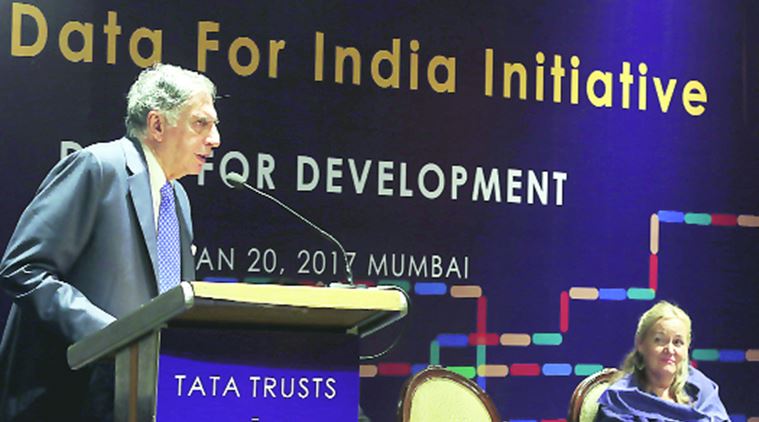
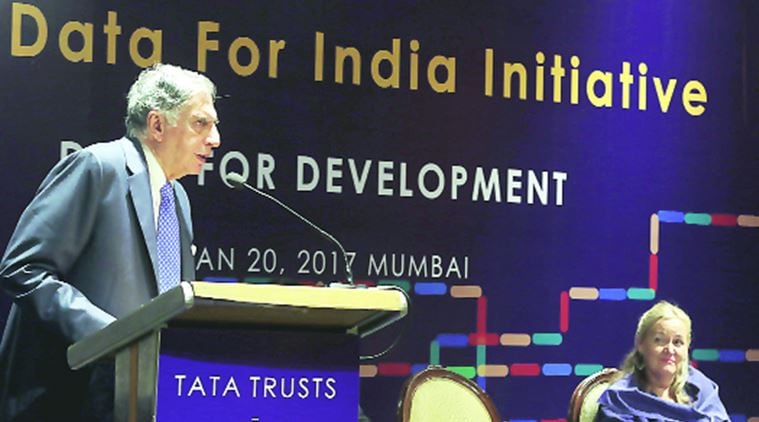
Tata Trusts Chairman, Ratan Tata, and Patricia McCarney, President and CEO, World Council on City Data, at the launch in Mumbai on January 20. (Photo: Indian Express)
In just over a year, the GCI/WCCD has proven its thesis. ISO 37120 is both relevant and applicable to Indian cities and has the potential to drive smart, sustainable, resilient, prosperous and inclusive development throughout the country. The ISO global seal of approval allows Indian cities to draw comparative benchmarks with other global peer cities and will inform the data-driven decision-making that is needed to accommodate India's rising population and build prosperous and inclusive cities. The partnership with the Tata Trusts serves as an invaluable model for local engagement and will help to continue to drive city engagement with WCCD ISO 37120 certification in India. Most excitingly, the WCCD is now inviting all Indian cities to come on board, to become WCCD ISO 37120 certified and to join the WCCD's global network of cities that supports city to city learning.
Pune, Surat and Jamshedpur are now empowered with globally comparable, standardized and independently verified city-level data. WCCD's ISO 37120 high-caliber data positions these cities as global leaders for city to city learning. It allows cities in India, Canada and globally to confront global agendas such as climate change, measuring progress on the United Nations SDGs and the 2030 Urban Agenda.
In the Indian context, it allows Indian leaders to address rapid urban growth. The data supports prime minister Modi's Smart Cities Mission and drives evidence-based decision-making to solve the myriad challenges faced by Indian cities. As the WCCD continues to expand worldwide, we remain committed to supporting cities across the globe to develop a culture of data, which drives a culture of innovation for a more inclusive and sustainable prosperity. All of which is the very essence of smart cities and smart countries.
Tata Trusts Chairman, Ratan Tata, and Patricia McCarney, President and CEO, World Council on City Data, at the launch in Mumbai on January 20th. Credit: Indian Express
The City Data for India Initiative, a major joint initiative from the new partnership between the World Council on City Data (WCCD) and the Tata Trusts was announced in Mumbai on January 20th, in a bid to build high caliber data in Indian cities. At a national roundtable held in Mumbai, and opened by WCCD President & CEO Dr. Patricia McCarney and Chairman of Tata Trusts Mr. Ratan Tata, the assembled delegates also celebrated the WCCD ISO 37120 certification of the first, three cities in India - Pune, Surat and Jamshedpur.
WCCD President & CEO Dr. Patricia McCarney shared her impressions of the exciting new partnership and the WCCD ISO 37120 certification of the first three cities in India:
“The WCCD is committed to supporting cities across the globe to develop a culture of data, which drives a culture of innovation for a more inclusive and sustainable prosperity, which is the essence of smart cities and smart countries. Our first, three WCCD ISO 37120 certified cities in India have quickly become outstanding exemplars of the lessons learned throughout the WCCD network. With the assistance of our partners at The Tata Trusts – supported by PwC – this initiative has unequivocally proven that cities have the potential to drive a culture of data that will inform decisions, investments and transparent governance. Further, this data has the power to serve as a catalyst to create truly smart, sustainable, resilient, inclusive and prosperous cities of tomorrow dedicated to the principles that unite the cities throughout the WCCD network."
Speaking at the event Mr. Ratan Tata, Chairman, Tata Trusts, congratulated Dr. McCarney, referring to the City Data for India initiative as a new movement:
"Through the City Data for India Initiative, we are showcasing the true strength and importance of data for cities. Through our partnership, we are going beyond the age of looking at colored data, selected data to non-discretionary collection and capture of data, setting goals, evaluating ourselves against global peers. It gives me great pleasure to know that we are making a start with Surat, Jamshedpur, and Pune as cities who are willing to share their city data. It will enable people in both public and private sector to set civic goals, to evaluate outreach and impact of policy and initiatives. This is an exceedingly important move in the long term. Tata Trusts is proud to participate in this and congratulate the three cities for being willing to be a partner in what could be a tremendously important movement towards a truly Digital India.”
As reported to The Economic Times, Mr. Tata also shared additional views on the importance of the City Data for India Initiative. "It has become clear that we are now giving the cities true strength by working on data and recognizing the importance of data...The impact of this profound usage is huge. It will enable both the government and private sectors to set civic codes, evaluate outreach and finally assess the impact of policy and initiatives."
The goal of the City Data for IndiaInitiative is to contribute to improved infrastructure services and smart decision making in Indian cities as well as driving inclusive prosperity and quality of life for millions of Indian urban citizens. It will empower city leaders, decision-makers and citizens from cities across India to make data-informed decisions to improve city planning, infrastructure investment and operational performance management using ISO standardized, comparable city data.
The value of high-quality city data is particularly important in India, where the urban population is projected to grow from 410 million in 2014 to 800 million by 2050, placing enormous demands on city leaders, planners, and decision-makers in all tiers of government.
Shri Sudhir Mungantiwar, Cabinet Minister of Finance, Planning, and Forest Departments, Government of Maharashtra gave a keynote address on the challenges and opportunities of India’s urban transformation and the value of data. Additionally, the three Municipal Commissioners of the City Data for India Initiative pilot cities – Pune, Surat & Jamshedpur – delivered presentations showcasing their existing city data related programs and to highlight the opportunities to enhance planning, decision-making, and infrastructure investment through internationally-comparable certified city data.
"The WCCD is now welcoming all Indian cities to become ISO 37120 certified and to join us for the 2017 Global Cities Summit in Dubai to exchange lessons with cities globally,” stated WCCD President and CEO Dr. Patricia McCarney. “We congratulate Pune, Surat, and Jamshedpur on receiving their WCCD ISO 27120 certification and celebrating their excellence within India while showcasing their achievements in relation to other peer cities across the globe. They have now joined the WCCD global network of cities where comparable ISO standardized data is driving innovation and city to city exchange.”
The roundtable also saw the unveiling of key data highlights for Pune, Surat, and Jamshedpur, based on fundamental indicators and guidelines such as economic development, water and sanitation, environment and energy, public safety, governance, and, education and health in comparison to other WCCD certified cities globally.
City of Cambridge joins world-class cities receiving ISO Platinum certification
From L to R: Dr. McCarney, Mayor Doug Craig, City Manager Gary Dyke
On Friday, December 16, the World Council on City Data (WCCD) officially recognized the City of Cambridge with ISO 37210 Platinum certification. The City becomes the third and smallest city in Ontario, and only the sixth in Canada, to receive this internationally-recognized certification. It is awarded to cities who reach the highest standard in collecting and sharing data, and using it for effective decision making.
“Receiving the ISO certificate is a prestigious honour,” said City of Cambridge Mayor Doug Craig. “It demonstrates how our small city can make a big impact on the world stage. We have now joined a network of innovative cities across the globe committed to sharing data to improve services and quality of life for our communities. It opens the door for us to collaborate and learn from each other to take Cambridge to the next level.”
The WCCD is the global leader in standardized city data that helps create smart, sustainable, resilient and prosperous cities. Cambridge’s membership in the WCCD gives the City the opportunity to compare best practices with other cities and actively participate in a worldwide organization that uses standardized metrics to find solutions to shared problems. Cambridge’s ISO 37120 data is now viewable on the WCCD Open City Data Portal (accessible through www.dataforcities.org) which allows for local, national and international comparisons.
“We heard from citizens that they want us to be transparent, accountable and innovative,” said Cambridge City Manager, Gary Dyke. “The ISO certification recognizes excellence in all three: transparency in providing open data; accountability in our decision making; innovation in becoming leaders worldwide by meeting the highest standards of service delivery planning.”
The ISO certification comprises 100 indicators around 17 themes on city sustainability and quality of life. It is awarded to cities based on the recommendation of an independent third-party verifier who reviews city data.
“As the World Council on City Data continues to build a network of cities committed to high caliber data across Canada and the globe - we are particularly proud to welcome the City of Cambridge,” stated WCCD President & CEO Dr. Patricia McCarney. “As a true innovator for smaller communities across the country, Cambridge’s commitment to open data to inform infrastructure investment and drive evidence-based planning and decision making, marks the city as an exemplar of a smart, innovative and inclusive city in Canada and on the global stage. On behalf of the WCCD, I congratulate Mayor Craig, City Manager Gary Dyke and the entire Cambridge team for this tremendous accomplishment and the city’s ongoing commitment to open, internationally standardized and comparable city data.”
To learn more about the WCCD and the certification, please visit www.dataforcities.org.
Primary Media Contact:
Andrea Montgomery
Interim Director of Communications
Office of the City Manager
City of Cambridge montgomerya@cambridge.ca
(519) 740-4680 ext. 4606 / cell: (289) 983-1781
WCCD Contact:
James Patava
Director of Communications
World Council on City Data
(416) 966 – 2368 / cell (416) 970-3544 James.Patava@globalcities.ca
As the WCCD continues to forge ahead as a leader in the global smart cities space, the organisation continues to drive the development of ISO 37122: Indicators for Smart Cities, to complement the already published ISO 37120 with cities across the world already reporting data to the WCCD Open City Data Portal.
The need for data to drive smart city solutions is a central tenet of the WCCD in its support to cities
and nations committed to national and global smart cities agendas. As the number of cities adopting ISO 37120 continues to grow across Canada and globally, cities now have standardised definitions and methodologies for a set of key performance indicators as tools through which to become more sustainable, and smarter.
Image via http://rethink-iot.com/
A New ISO Standard for Smart Cities: ISO 37122
This new ISO standard is currently slated for publication in 2017. This new standard – another global first – is currently in the draft stage within TC-268, Working Group 2, led by Dr. McCarney, where globally standardized indicators and methodologies are being finalized.
The key elements of a smart city, as envisioned by TC-268 include the following themes: smart connected infrastructure, smart environment, smart economy, smart government, smart living and smart mobility. The WCCD global network of cities will meet at the 2017 Global Cities Summit (in partnership with the Executive Council of Dubai) from March 7th-9th, 2017, in Dubai. The theme of the Summit will be Cities on the Global Stage - Data as the Universal Language.
Key elements of ISO 37122
While the growing global debate continues around what exactly constitutes a smart city, the WCCD believes that building a culture of data and having globally comparable, standardised city data that enables cities to learn from each other, is at the core of becoming smart and sustainable.
While this might seem like a lofty goal, tools like ISO 37120 and the culture of city data that it entrenches within a city will make the goal of city sustainability and smartness much more realistic and eventually achievable.
To read more about the WCCD and its trailblazing path in the smart city space, check out the following article in Cities Today.
November 28, 2016 Heerlen, The Netherlands World Council on City Data (WCCD) President and CEO, Dr. Patricia McCarney is in the Netherlands this week, and has announced a new partnership between the Dutch Central Bureau of Statistics (CBS) and the WCCD. According to Dr. McCarney: “As the world's cities are increasingly at the forefront of addressing major societal challenges like climate change, smart infrastructure, public safety and inclusive economic development, it becomes particularly important to have reliable and consistent data available to cities and their citizens at the local level. Both the WCCD and CBS believe in the fundamental societal importance of reliable and consistent data. That is why we are working together to build city level data across the Netherlands.”
CBS Director General Tjark Tjin-A-Tsoi and WCCD President & CEO Patricia McCarney sign new partnership agreement in Heerlen, The Netherlands
The new partnership was announced at the launch of the new CBS Urban Data Centre and Dr. McCarney signed the partnership on stage with CBS Director General Tjark Tjin-A-Tsoi. According to the CBS, the CBS Urban Data Center/Heerlen will map out the regional impact of national developments.
The new partnership is underpinned by three, general collaborative opportunities:
WCCD ISO 37120 Certification for Dutch Cities. The WCCD and CBS will work together to jointly support ISO Certification for Dutch Cities – building on the foundation of the four cities already certified. In addition to Heerlen and Eindhoven, both Amsterdam and Rotterdam are already WCCD ISO 37120 certified cities this high calibre city data is important for both city leaders and their citizens as well as national leaders committed to building smart and globally integrated cities that will drive the economy of the Netherlands.
Facilitation of CBS data to support city-level WCCD Certification. In the Netherlands, 60 percent of the indicators in the ISO 37120 standard is data already collected and reported by CBS. This will rapidly facilitate Dutch cities achieving WCCD ISO 37120 certification.
Integration of WCCD Certification into the CBS Urban Data Centre model. Inclusion of WCCD ISO 37120 certification as a core component of the ‘CBS Urban Data Centre’ model for existing, planned, and future CBS Urban Data Centres.
In addition to the partnership announcement, Dr. McCarney also presented the cities of Eindhoven and Heerlen with WCCD ISO 37120 Platinum Certification.
WCCD President and CEO with city leaders from Heerlen and Eindohven
“It is a great pleasure to be here today with the city leaders of Eindhoven and Heerlen," stated Dr. McCarney. ”Both cities have shown tremendous dedication to creating a more sustainable, inclusive, resilient, smart and prosperous future. I would like to extend my sincere congratulations to Mayor Rob van Gijzel of Eindhoven and Mayor Ralf Krewinkel of Heerlen – as well as to their staff – for this profound commitment to the power of standardised urban data.”
Both certified as WCCD ISO 37120 Platinum Cities, Eindhoven and Heerlen each reported more than 90 of the 100 indicators within ISO 37120. Four Dutch cities are now WCCD ISO 37120 certified at either the Gold or Platinum level.
For more information, please contact:
James Patava (WCCD) - james.patava@globalcities.ca
+14169662368
The WCCD is pleased to welcome the City of Surrey, British Columbia (Canada) as its latest ISO 37120 Platinum certified city.
WCCD President and CEO Dr. Patricia McCarney welcomed the city, highlighting its commitment to open date and sustainability.
“It is my pleasure to welcome the City of Surrey to the World Council on City Data as an ISO 37120 platinum certified city. In addition to being the fifth Canadian city certified, Surrey is also the first city certified in British Columbia and in fact, in western Canada. The dedication of Mayor Hepner, the Council and city staff to open, standardized and comparable city data will help to increase quality of life for all citizens while driving evidence based decision making and data driven solutions. The City of Surrey stands out in Canada and globally as a leader in working to create a more sustainable, resilient, inclusive and prosperous future for its residents.”
For more information about the WCCD, or ISO 37210, please contact:
info@dataforcities.org
or - 416-966-2368.
(Please click the following link to below to download the full release)
As part of the continuing Citiscope series on the New Urban Agenda, WCCD President and CEO expands upon what she see's as the key element missing from the document. "Although the New Urban Agenda briefly mentions strengthening the data and statistical capacity of sub-national and local governments, it does not directly address the critical importance of data in achieving viable development goals or how a lack of reliable, comparative data has been a stumbling block for cities in the past. Worldwide, city governments are making efforts to address the complex challenges of inequality, climate change and infrastructure deficits, while attempting to chart a course to a sustainable, smart, resilient, prosperous and inclusive future for their citizens. However, without high-quality, standardized, city data to guide problem solving and decision making, these risks cannot be fully addressed. The World Council on City Data firmly believes that ISO 37120 can address this critical data deficit. Data is absolutely fundamental for citizens and governments to create transformative change. While statistics are gathered by national governments and international agencies, there are enormous gaps in comparable city-level data. Where urban indicators do exist, they are not standardized, consistent or comparable over time or across cities. Too often, municipal officials lack the capacity to implement local data strategies, and data is not accessible or usable by citizens seeking to participate in city building or to hold their leaders to account."
— Patricia McCarney, President & CEO, World Council on City Data
As part of an ongoing series by Citiscope in the margins of Habitat III, the WCCD President and CEO, Dr. Patricia McCarney, weighed in on what she views as the most transformational aspect of the proposed New Urban Agenda.
"One of the most critical aspects of the New Urban Agenda is that it situates cities as essential in combating various global issues such as poverty and hunger, reducing inequality, empowering women and girls, improving health and well-being, fostering resilience and protecting the environment. Like many of my colleagues from around the world, I firmly believe that the global struggle for sustainable development will be a battle largely waged in cities, where two-thirds of the global population will reside by 2050. From the perspective of the World Council on City Data (WCCD) — which is helping to create sustainable cities worldwide through ISO 37120, the first international standard for sustainable cities — the fact that the New Urban Agenda raises the need to harness data and statistical capacities as a means of implementation is an idea with the potential to be globally transformative. Ibelieve that the challenge of creating a more sustainable world — and specifically more sustainable cities — will hinge on the availability of high-quality, standardized and comparable city data for cities to plan, invest, measure progress and learn from other cities globally through accurate benchmarks and high-caliber data analysis."
#DATAFORCITIES is a weekly publication of the WCCD thathighlights a data point from each of the WCCD Cities – and, more importantly, shows how each city is harnessing standardized data to build the sustainable, prosperous, smart, resilient and inclusive cities of tomorrow.
Every week – and starting with the WCCD Foundation Cities for the next twenty weeks - a WCCD City will be profiled with a short, 3 page snapshot and promoted throughout the week with innovative visualisations across Twitter (#dataforcities), Facebook and LinkedIn.
A fully downloadable and shareable PDF of the profile can be found here. Previous reports can be found in the News and Updates section of the WCCD website
For new subscribers, please feel free to sign up here!
#DATAFORCITIES
is a weekly publication of the WCCD thathighlights a data point from each of the WCCD Cities – and, more
importantly, shows how each city is harnessing standardized data to build the
sustainable, prosperous, smart, resilient and inclusive cities of tomorrow.
Every week – and starting with the WCCD Foundation Cities* for the next twenty
weeks - a WCCD City will be profiled with a short, 3 page
snapshot and promoted throughout the week with innovative visualisations
across Twitter (#dataforcities), Facebook
and LinkedIn.
A fully shareable PDF of the profile can be found here.
For new subscribers, please
feel free to sign up here!
With such a small difference between Melbourne and Toronto,
the WCCD uses ISO 37120 data to understand the results
Last week, three World
Council on City Data (WCCD) Foundation Cities were included in the Economist Intelligence Unit’s (EIU) Global Liveability Ranking 2016, which according to the EIU “provides scores for lifestyle challenges in 140
cities worldwide.” Toronto, Melbourne and Helsinki, all ISO certified by the
WCCD, ranked in the Top 10 of the well-publicised international city ranking. According to the annual index,
Melbourne ranked as the number one city on the list with a score of 97.5 out of
a possible 100, with Toronto coming in fourth place at 97.2.
Toronto and Melbourne
have always been regarded by leaders from both cities as close peer cities for
comparative learning. With such a narrow difference between top-placed
Melbourne and fourth placed Toronto, the WCCD has taken a closer look at what might
account for the .3 difference and how liveability scores play out across WCCD
ISO certified city data.
What does the WCCD ISO 37120 data tell us?
As a complement to the EIU’s Liveability Ranking, the WCCD has taken a closer look at what exactly separates Toronto and Melbourne, leveraging high-calibre, globally standardised data that conforms to ISO 37120 that both cities have reported to the WCCD on an annual basis.
Toronto and Melbourne are very closely matched across a number of ISO 37120 indicators related to city services and quality of life. Generally speaking, Toronto performs better on safety, and Melbourne performs better on jobs. However, quality of life indicators for both cities are remarkably similar.
Melbourne performs better than Toronto on Jobs:
·
Jobs - Melbourne has 5% unemployment compared to Toronto with 9.5% and for youth unemployment Melbourne has 7.8% vs Toronto with 21.6 %
Toronto performs better than Melbourne on Safety and Shelter:
Safety - on safety indicators such as number of homicides (Toronto has 2.1 homicides per 100 000 vs. Melbourne at 8.18 per 100 000) and violent crime (Toronto has 986.9 per 100 000 vs Melbourne’s 2849.26), this despite the fact that Melbourne has a higher number of police officers than Toronto (253.8 vs 195.7 per 100 000)
Homeless - Toronto has fewer homeless people than Melbourne (395 vs 197 per 100 000 population)
Otherwise Toronto and Melbourne are closely matched
Both cities focus extensively on access to green space and planting trees - both cities provide similar green space for residents, critical for health and wellbeing (451.93 hectares for Melbourne and 445.67 for Toronto). Toronto has a higher number of trees planted with 3373 per 100 000 population compared to Melbourne’s 2640.68 per 100 000 population
Quality of education – a key measure of economic performance – is quite similar in both cities, through the lens of primary education student/teacher ratio, secondary school completion, number of higher education degrees.
On air quality (as measured by PM 2.5 - particulate matter in the air) both cities record similar air quality numbers: 7.4Цg/m3 for Melbourne and 8.96 Цg/m3 for Toronto.
Both cities have similar life expectancy: 83.5 in Melbourne and 83 in Toronto
In terms ofgender representation in governance, Toronto slightly outperforms with 41.7% female elected officials, with Melbourne at 36.4%
What is the EIU Global Liveability Ranking? What is the WCCD
ISO 37120 Data for Cities Initiative?
The EIU’s liveability
survey includes 30 qualitative and quantitative factors across five categories
which include: stability; healthcare; culture and environment; education; and
infrastructure. For qualitative factors (which are the majority), each city is
assigned a rating by a group of EIU analysts and in-city contributors, with
each factor rated as acceptable, tolerable, uncomfortable, undesirable, or
intolerable. Unlike the EIU survey which relies on subjective assessment by
experts, WCCD’s ISO 37120 indicators are solely data-driven and independently
verified, as well as globally standardized – allowing for apples to apples
comparisons. Both Melbourne and Toronto have been ISO certified by the WCCD,
based on reporting data in conformity with ISO 37120 – the first international
standard on city data. Other contrasting features: while the EIU draws on
qualitative measures, the WCCD uses only numeric measures; while the EIU data
and methodologies are not open to the public, the WCCD data is reported on an
open data portal www.dataforcities.org; within the EIU’s
methodology, it is unclear as to which geographic boundaries are used to
demarcate each city - WCCD cities are defined according to official administrative
jurisdictional boundaries—for example, for the City of Melbourne this means the
area of 37.7km2 within the municipal boundaries rather than the
larger urban area that may be commonly referred to as “Greater Melbourne”.
For more comparative data
on over 25 cities from around the world, visit the WCCD homepage at www.dataforcities.org.
For more updates from
the WCCD, please sign up to our mailing list here, and don’t forget to follow the WCCD
on Twitter, Facebook, and LinkedIn.